Point at the Step: A Bench-Level Audit for Work Instructions That Actually Get Used

Photo: Dey.sandip, CC BY-SA 4.0, via Wikimedia Commons
Every plant has one. The work instruction binder with the revision stamp, the sign-off page, and the laminated tab. It passes every document audit because the dates are right and the signatures are in ink. Then you walk to the bench and watch an assembler build the same unit from memory, a coffee-stained printout, and a question shouted across the aisle.
That gap is not a paperwork problem. It is a tooling problem. A work instruction is supposed to be a shop-floor tool, not an ISO artifact. If the person doing the job cannot point at the step they are on, the sheet is not helping. It is just evidence that somebody once wrote something down.
The audit starts at the bench, not in the office
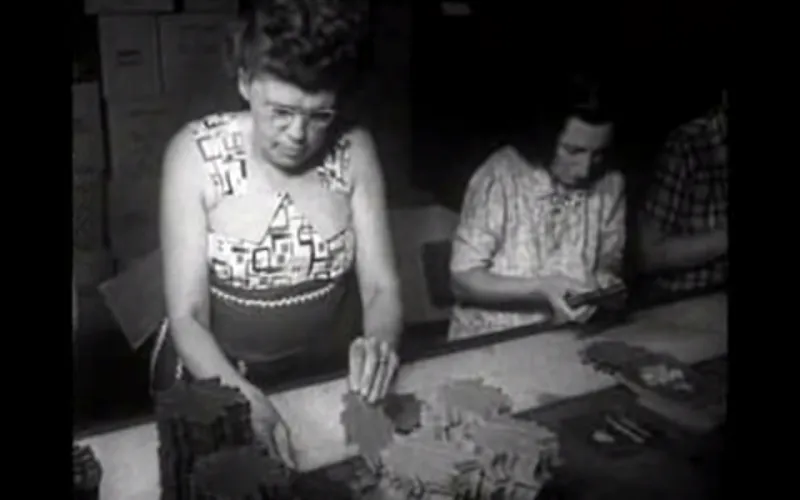
A visual work instruction audit does not begin with a document review. It begins with a stool, a clipboard, and twenty minutes of watching. Pick a station that builds a repeatable unit. Watch three assemblers across a normal run. Do not stand over their shoulder like a safety inspector. Stand where you can see the sheet, the parts, and the assembler's eyes without becoming the main event.
The first question is simple: where do their eyes go? Do they read the step, glance at the photo, look at the part bin, or stare at the ceiling because they have done it four hundred times? All of those are data. The goal is not to catch someone skipping the sheet. The goal is to find out whether the sheet is worth looking at.
Count the look-ups and the workarounds
Bring a tally sheet with two columns: looks at instructions and questions asked. Every time the assembler glances at the work instruction, make a mark. Every time they ask a neighbor, call a lead, or walk to the toolbox for a part they should have had at the station, make a mark. At the end of the run, you have a rough usability score.
A low look-up count can mean the job is genuinely simple. It can also mean the sheet is so dense that nobody bothers. The difference shows up in the questions. If the assembler never reads the sheet but asks the lead the same torque question every shift, the instruction is not carrying its weight. Tribal knowledge is doing the job instead.
Try the finger test. Ask the assembler to follow the sheet for one unit and point at the step they are on as they work. If their finger drifts, if they jump from step 3 to the photo at step 11, or if they say something like, I skip that part, it is wrong, you have found a red-line candidate. Do not argue with the finger. Follow it.
Red-line with the line, not for the line
Red-lining works best when the person doing the job holds the pen. Hand them a red marker and a stack of sticky flags. Ask them to mark every step that is confusing, every photo that does not match the part in front of them, and every callout that points to the wrong side of a bracket. You are not looking for polished language. You are looking for friction.
Listen for the phrases that signal trouble: it depends, sometimes it is the other one, we just know, or the print is upside down. Those are not complaints. They are missing information. A good instruction answers the question before it gets asked. A bad one assumes the assembler has been on that station since the line was installed.
Rebuild the sheet like a fixture
Once the red lines are in, rebuild the instruction the way you would build a fixture: make it hard to get wrong. Start with photos. One clear photo per critical step beats three paragraphs of description. Use arrows and callouts that show orientation, part numbers, and the finished condition. If a step has a torque value, put it next to the joint in the photo, not buried in a note at the bottom.
Cut the word count. Split any step that contains the word then more than once. Put the tools and parts at the top where an assembler can see them without flipping pages. Add a simple visual check at the end: what good looks like, and what it looks like when it is not. Keep the revision control, but treat the sheet as a living tool. Laminate it, put it at the station, and make sure it matches the parts actually in the bin.
Put the audit on the calendar
A one-time cleanup turns into a museum piece fast. Run the bench audit quarterly, after a major changeover, or whenever a repeat defect shows up. Track three things: look-ups per unit, questions to the lead, and rework tied to missed steps. None of those numbers need to be perfect. They just need to move in the right direction.
The point is not to create more paperwork. The point is to stop pretending that a document passing review means it works at the bench. If the sheet cannot be pointed at, followed, and trusted by the person building the unit, it is not an instruction. It is a filing cabinet decoration.