Trace It, Don't Chase It: The Case for Shadow Boards That Show You What's Missing
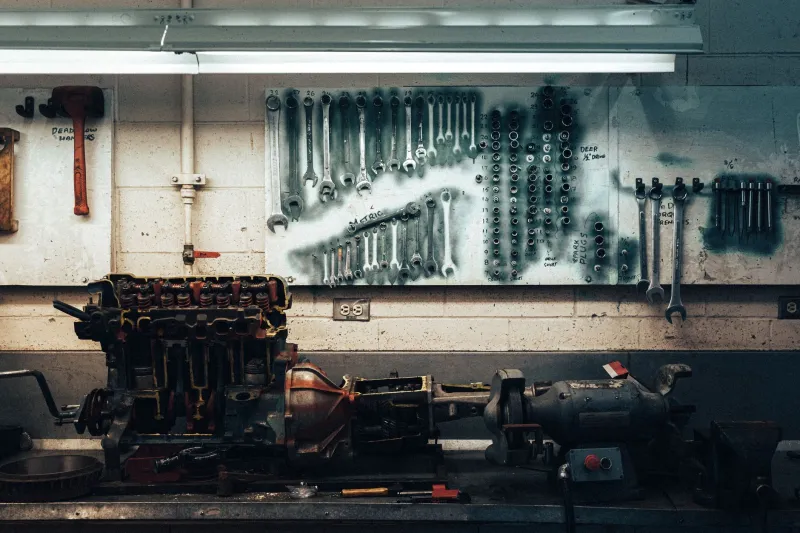
The 10mm combination wrench vanished sometime between second shift Friday and Monday's startup. Nobody stole it. It just... migrated — into a maintenance cart, a jacket pocket, the mysterious void under the press. For three days the operator at that station borrowed a wrench from the next cell over, and for three days the torque sequence got a little looser in the retelling.
That's the thing about missing tools: they don't announce themselves. They quietly turn a two-minute job into an eight-minute scavenger hunt, and they hold the door open for whatever shortcut happens to be closest to hand.
A shadow board closes that door. Not because foam is magic, but because a silhouette turns an invisible problem into a visible one. You glance up, you see a hole, you know something's off. That's it. That's the whole trick.
Memory Is the Weakest Fixture at Any Station
Most assembly stations run on tribal knowledge. The veteran knows the 3/8 socket lives in the second drawer, that the calibration sticker on the torque driver gets checked Tuesdays, and that the left-hand fixture needs a shim when the plant drops below 60 degrees. That's real expertise, and it deserves respect.
It also doesn't scale.
When that person takes a job across town — and in plenty of US shops right now, that's happening often — the knowledge walks out the door with them. What's left is a new hire, a clipboard, and a supervisor already three calls behind. A shadow board converts some of that tribal knowledge into something the building knows instead of something one person knows.
What a Shadow Board Actually Does
Three jobs, in order of importance:
- It error-proofs the pick. A silhouette that only fits one tool makes returning the wrong tool physically awkward. That's not a poster on the wall; that's a constraint.
- It standardizes the station. Every cell running the same operation gets the same layout, so a flexed operator can move between them without relearning muscle memory.
- It makes the audit nearly free. Missing tool equals visible hole. No inventory count, no drawer spelunking.
What it doesn't do is fix a station that has forty tools when it needs nine. Sort first, then trace.
The 20-Minute Audit You Can Run This Week
Pick your worst station. You already know which one — it's the one people sigh about. Block twenty minutes, and bring a marker, a sheet of cardboard, a utility knife, and your phone.
Minutes 0–4: Empty it. Take every tool off the bench and put it on a rolling cart. All of it, including the ones that are "always there." An empty bench is the only honest starting point you'll get.
Minutes 4–8: Sort into three piles. Used every cycle, used a few times a week, and why is this here. That third pile is usually the biggest, and it's where the savings hide — duplicate wrenches, a broken clamp nobody threw away, three rolls of tape.
Minutes 8–12: Trace the keepers. Lay the daily-use tools on the cardboard in the order you actually reach for them, left to right, top to bottom, following the motion of the job. Trace the outline. This is a draft — don't get precious about it.
Minutes 12–16: Set the standard. One tool, one silhouette. Mark minimum and maximum if it's a consumable. Write the station owner's name and the next review date on the board. A shadow board without an owner becomes wall art within a month.
Minutes 16–20: Photograph it. Take a clean shot of the finished layout and post it at the station and in the team chat. That photo becomes standard work for the next person who rebuilds the board, and it ends the "well, it used to live over here" debate for good.
Two Shops, Two Small Wins
A 14-person sub-assembly shop outside Grand Rapids, Michigan, ran this exercise on their fastener-heavy cell after a run of wrong-length bolt calls. The fix wasn't fancy — a sheet of blue foam with a cutout for each bolt length and the part number written underneath. Wrong-part picks on that cell fell to near zero over the next quarter, mostly because an operator could now see the 5/16 bin running low before they hit the last one.
A Tier 2 supplier in northern Ohio went a different route: no foam at all, just pegboard and tape outlines at the shared maintenance bench. Cheaper, uglier, and it worked. Their maintenance lead's line stuck with me — “I stopped buying tools I already owned.” They'd been double-ordering sockets for years because nobody could find them.
Different materials, same principle. Visible beats remembered.
Where Shadow Boards Go to Die
Three failure modes, all preventable:
- The board drifts. Someone replaces a tool with a different model, it no longer fits the cutout, so it lives on top of the foam. Fix: whoever swaps a tool re-traces the silhouette. Make that a rule, not a favor.
- The board becomes storage. Tools that aren't used at that station get hung there "just in case." Fix: the sort step isn't a one-time event — run it again quarterly.
- Nobody owns it. Fix: a name and a date on the board, plus a two-minute glance at the start of every shift.
The Five-Minute Weekly Reset
Shadow boards don't need a project plan to stay alive. They need a habit. Once a week — pick a day and stick to it — the team lead walks the cells and looks for three things: empty silhouettes, tools sitting outside their outlines, and anything that looks like it's breeding. Log what you find. If the same silhouette is empty every single week, you don't have a discipline problem. You have a tooling problem, and that's worth a purchase order.
Start With the One That Annoys You Most
You don't need a consultant or a capital request. You need an empty bench, a marker, and twenty minutes. Pick the station where people grumble the loudest, run the audit, and put a photo on the wall.
The hole in the foam is the message. Everything else is just how you get there.