The Shelf Keeps Score: A Changeover Sweep for Parts That No Longer Belong
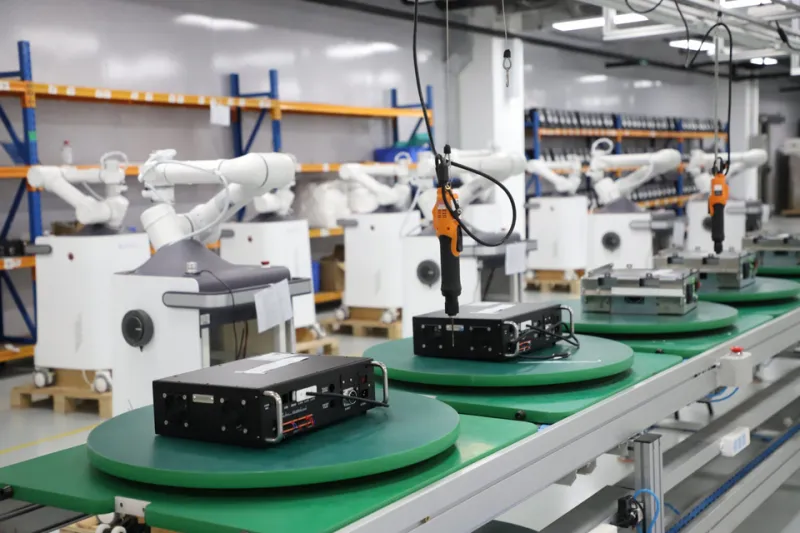
Photo: Baitutai, CC0, via Wikimedia Commons
An engineering change notice has a clean path. It gets signed, logged, attached to a meeting invite, and sent to the people who need to know. The line has a messier path. The line has bins with old labels, shadow boards with old outlines, kit carts built last Thursday, and a work instruction in a plastic sleeve that nobody has looked at since the last changeover.
When those two paths drift apart, the old part does not vanish. It waits. It sits in the back row of a bin, under a label that still says the right thing but points to the wrong revision. That is the trap. The shelf keeps score, and it does not care what the email said.
The Change Notice Is Not the Change
The first mistake is treating the effective date on the paperwork as if it flips a switch on the floor. It does not. The effective date tells you when the new part is allowed. It does not remove the old part from the bench, the kit cart, or the shadow board. That work is physical, and somebody has to walk it.
A good changeover sweep starts with the notice in hand and a marker in pocket. You are not there to admire the paperwork. You are there to compare what the notice says with what a person would actually pick, grab, or assemble on the line.
Start Where the Part Sleeps
Go to the primary bin location first. Check the label against the notice. Then check the part against the label. That second check matters more than the first. A label can be updated in the system and still be wrong on the shelf. A bin can have the new label on the front and three old parts in the back.
Look behind the front row. Look at the bottom of the bin. Look at the shelf above and below. In a lot of shops, the obsolete part does not get a farewell tour. It gets pushed aside and covered by something newer. If the label and the part disagree, stop. Do not split the difference. Red-tag the bin and write down the notice number, the date, and who owns the decision.
The Label Is a Promise
A label is not decoration. It is a promise that says: if you pick from here, you will get this part. When that promise is stale, the assembler pays for it. So check every label that touches the changed part: the bin label, the shelf label, the kit cart label, the return rack label, and the handwritten tape label that has somehow survived three changeovers.
Pay attention to labels that have been taped over. Pay attention to labels with no revision or no part number. Pay attention to the label that says the old part name because somebody was in a hurry and the printer was down. Those are the ones that outlive the part.
Shadow Boards and Point-of-Use Photos
A shadow board is a memory device. If the outline of the old bracket is still there, the board is still asking for the old bracket. Remove the outline, cover it, or update the board before the next build. Do not leave an empty hook where an obsolete part used to live. Empty hooks get filled by habit.
The same goes for point-of-use photos. A photo at the station is often more powerful than a written instruction. If the photo shows the old part, the assembler will trust the photo. Update the picture or take it down. A wrong picture is worse than no picture.
Kit Carts Are Rolling Changeovers
A kit cart is a changeover on wheels. It was built from a kitting sheet, and that sheet has a revision. Check the carts staged for the next shift. Check the carts parked in the aisle. Check the kits that were built ahead because somebody wanted to get a jump on the schedule. Those are exactly where old parts hide.
If a kit contains the obsolete part, pull it and quarantine it. Then ask the harder question: who built it, and from what sheet? If the kitting sheet was not updated, the next cart will have the same problem. Fix the sheet, not just the cart.
Work Instructions and the Picture That Lies
The system may show the new revision, but the station may still hold the old print. Check the printed copy in the sleeve. Check the date. Check the photo. Check the part number in the step. If the instruction is a living document, make sure it is living in the right place.
This is not about blame. It is about the gap between the document and the bench. The gap is normal. The sweep is how you close it before the first build, not after the first reject.
The Return Path
Every obsolete part needs a place to go. If there is no clear path, the part stays in a coffee can on the bench and becomes folklore. Set up a red-tag area with a date, a notice number, and an owner. The part should leave the line or at least leave the point of use before the next build starts. A quarantine bin without a process is just a slower way to keep the old part in circulation.
A Twenty-Minute Sweep at Changeover
You do not need a committee. You need a walk. Take the notice, start at the first station, and work downstream. Check bins, labels, shadow boards, kit carts, point-of-use photos, and work instructions. Bring red tags. Write down what you find. Do not try to solve the whole plant in one pass. Solve the line.
End with a five-minute huddle. Say what changed, what got quarantined, and who confirms the first piece. The sweep is not a witch hunt. It is a handoff between the paperwork and the people who build.
Close the Loop Before the First Build
After the changeover, check the first piece against the notice. Verify the part number. Verify the revision. If the old part shows up, stop and trace it back to the bin, the cart, or the sheet. The goal is not perfection. The goal is to catch the old label before it catches a new build.
The shelf keeps score. Every obsolete part left behind is a future defect, a future stop, and a future explanation. The sweep is cheap. Do it before the first build, not after the first reject.